 FIFA (Federation Internationale de Football Association)- homepage of soccer's international governing body, with a good overview of the 2010 World Cup tournament
 Fox Soccer- interactive map of countries involved; chose a country and click "Country Facts"
 32 Teams, 1 Dream- ESPN vignettes about each team and its history
 CIA World Factbook- reference for basic data on every world country; check out meanings behind flags ("Flages of the World"); directly compare data from different nations ("Country Comparisons")
World Maps- click around to find a collection of various types of maps, including thematic maps such as language, religion, literacy, and population
Watch this CNN video
 , which does describes the interesting relationship of the tournament and its meaning to some of the people of South Africa.
Now take a look at some of the advertising for the World Cup- think about what types of attitudes and messages are portrayed and stressed- politically and culturally? Do you think they are effective? What about accurate, or appropriate? Who is represented, and how are they represented? Do you buy into any of these messages, or are they simply advertising campaigns?
Review this map of the countries qualifying for this year's World Cup, and answer the questions below...

Have a better look at this map here.
Do you notice anything interesting about the distribution of teams in the World Cup this year? Think especially about economics and population, and how they relate to geography in this case.
- Why do you think there are so many more European teams than any other continent?
- How come the majority of the African teams qualifying are from a very close geographical area?
- Do you think you have to know much about soccer to take a guess at these questions, or can you use historical, political, and social concepts to try and formulate and answer?
Remember your thoughts about these ideas when completing the activities below.

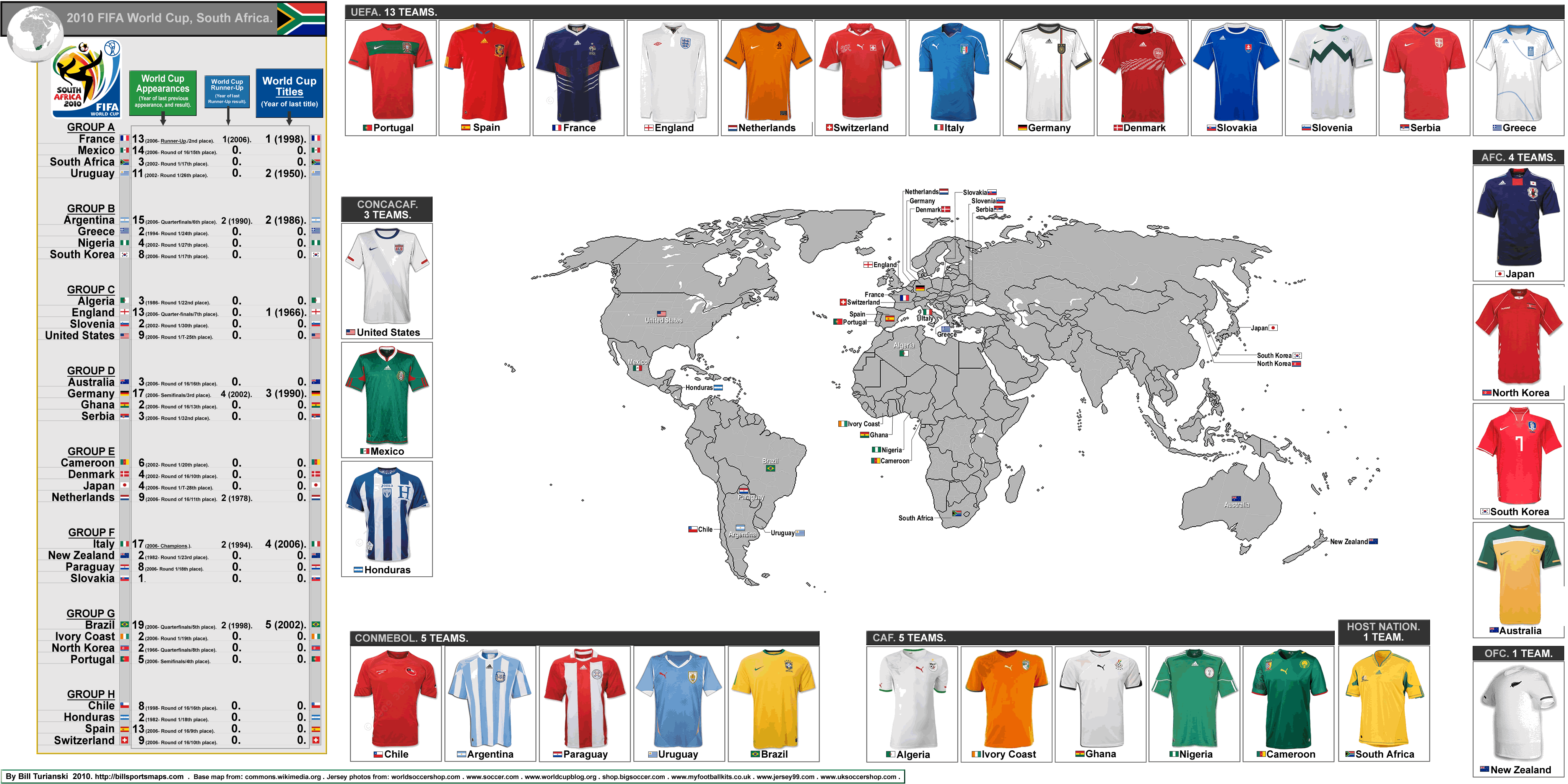
Most of the nations represented are first world countries. This likely has little to do with soccer and much more to do with the likelihood that countries with larger economies can support large scale entertainment/ sports. Nations that are not first world might be very close to it and also could be former areas of imperial expansion where soccer may have been brought by other nations.
ReplyDeleteIn regards to the ads, I think that all of these ads are making an attempt at removing all focus on nationality or class or borders and placing it on the event and sport of soccer. Each ad does this in a different way through various designs and schemes. Also, teams are not mentioned as much so that all fans from all countries will enjoy the commercial.
ReplyDeleteI agree with Brendan. Most of the people represented in the 2nd advertisement you posted are rich, white members of South African society who can pay the bills. However, the rest of the videos posted are more representative of the sport itself. I thought these were very interesting to watch.
ReplyDeleteI think the "Wines of South Africa" commercial is the one that maybe gets me most- it seems so blatantly directed toward one group of people (white people). It even incorporates colonial explorers. But if you watch the CNN video about some of the local communities, you get a very different perspective from the other side. It just makes you wonder about the sincerity in the advertisements, and that even if they depict a certain group of people and their culture, do they show them in an accurate light?
ReplyDeleteGoing off of your comment Nick, it does seem incredibly disingenuous to be talking about a sport changing the world when things are still so clearly segregated in the host country. I think this message that soccer brings us all together is always a little farfetched, but seems to be exaggerated even more so since it is taking place in South Africa.
ReplyDelete